Physiotherapy for Calf Strain: Step‑by‑Step Guide
Got a calf strain that’s keeping you off your feet? You’re not alone , many of us pull a calf during a sprint, a lift, or even a quick step. Below is a straight‑to‑the‑point plan that takes you from the first ice pack to full‑strength training, so you can get moving again.
⚠️ Disclaimer: The information provided here is for general educational purposes only and is not a substitute for professional medical advice. Always consult a qualified physiotherapist or healthcare provider for personalized assessment and treatment.
Step 1: Rest, Ice, Compression, and Elevation (R.I.C.E.)
First, protect the injured muscle. Rest means no weight‑bearing activities that hurt , you can still move other joints to keep blood flowing. Ice the calf for 15‑20 minutes three times a day during the first 48 hours. Cold narrows blood vessels, which reduces swelling and numbs pain.
Compression helps push fluid out of the tissue. A snug elastic wrap does the job, but avoid tightening so much that it cuts circulation. Improve the leg above heart level whenever you sit or lie down; a pillow under the ankle works well.
Most people notice less swelling and a calmer ache after a few days. If pain spikes or you can’t bear any weight after 48‑72 hours, it’s time to see a therapist.
Step 2: Gentle Active Range‑of‑Motion and Isometric Contractions
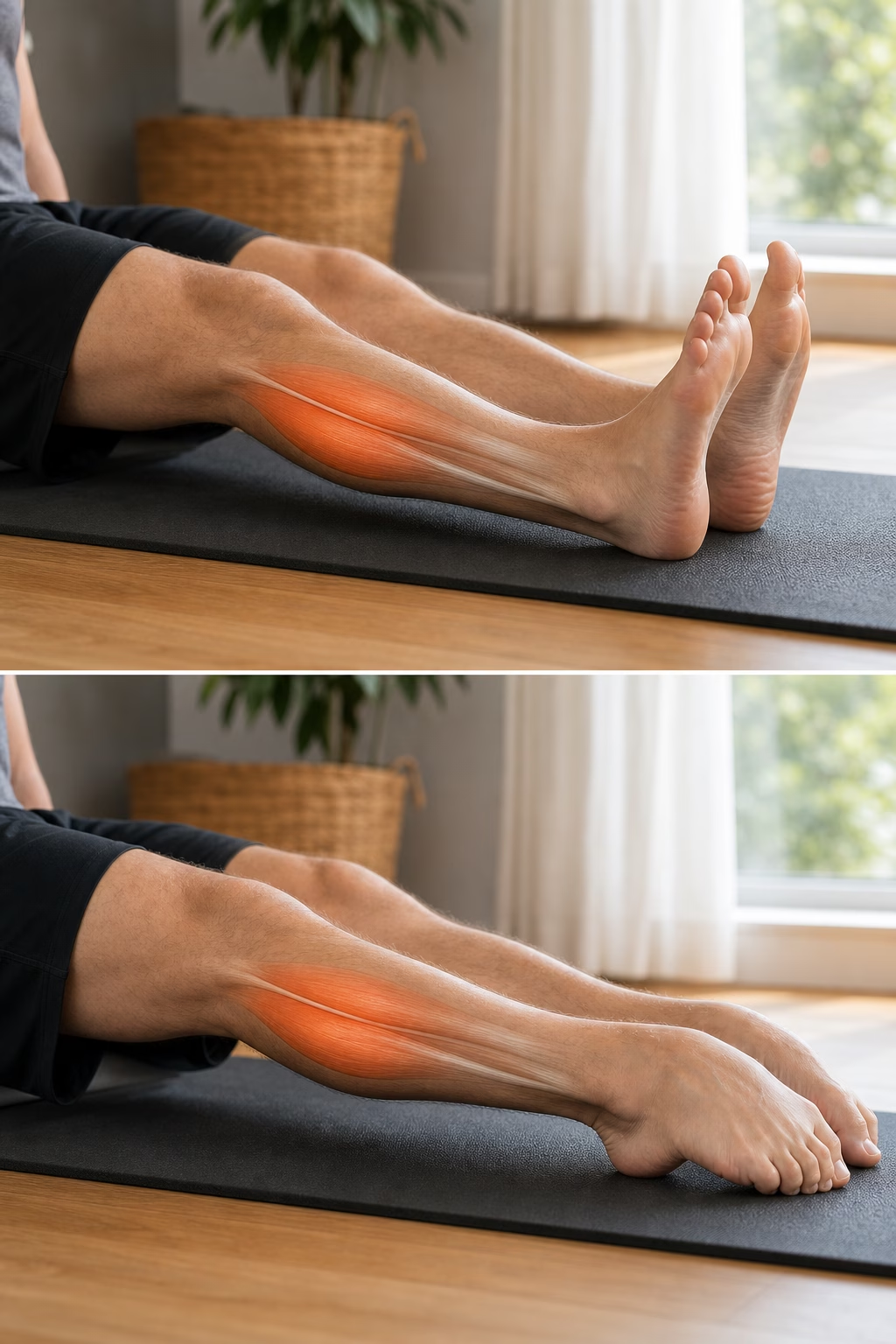
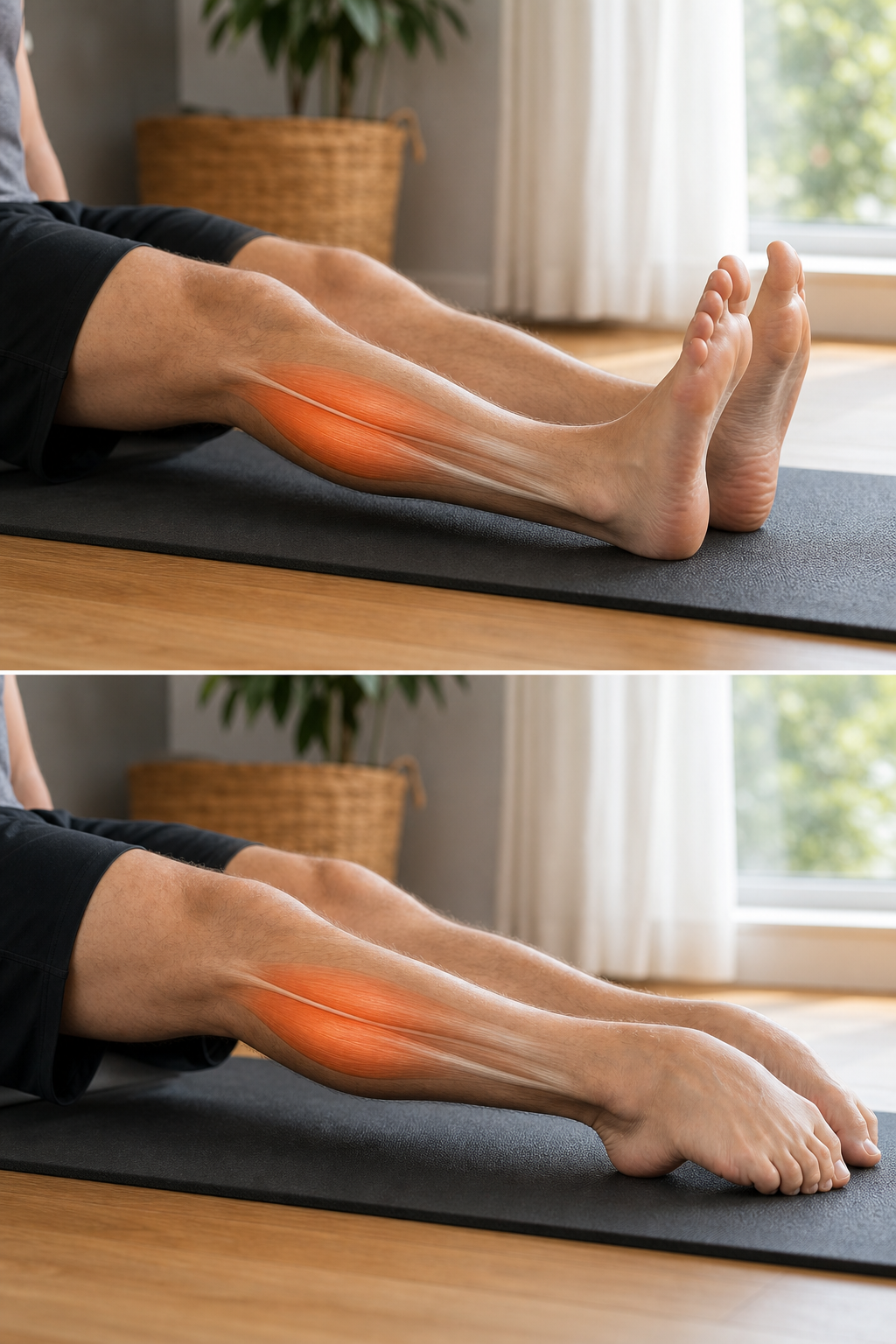
Now that the acute pain is easing, start moving the calf without stressing the fibers. Simple ankle pumps , point the toes down then pull them up , keep the motion pain‑free. Follow with ankle circles, rotating the foot clockwise then counter‑clockwise. These actions keep the joint lubricated and signal the muscle to stay active.
Isometric contractions let you tighten the calf without changing its length. Sit with the leg extended, press the foot into the floor, and hold for 5‑10 seconds. Do three sets of ten reps, twice a day. This keeps the muscle firing while protecting it from a full stretch.
These exercises are backed by research that shows early movement speeds up healing and reduces scar tissue formation. [1] The goal is to restore a pain‑free range of motion before adding load.
Our clinic in Surrey uses these same drills as the first phase of every calf‑strain program. If you’re unsure how to perform them correctly, Sprains and Strains Surrey, BC offers a quick video guide that walks you through the motions.
Step 3: Light Walking and Single‑Leg Calf Raises
When you can walk without sharp pain, add short, easy walks. Start with five minutes at a relaxed pace, focusing on an even stride. Walking promotes circulation, which brings nutrients to the healing muscle.
After a few days of painless walking, introduce single‑leg calf raises. Stand on the injured leg, lift onto the ball of the foot, then lower slowly. Aim for 10‑12 reps, three sets. Keep the motion controlled; avoid bouncing, which can overload the fibers.
These steps mirror the progression outlined in sports‑medicine reviews that track calf‑strain recovery timelines. Most athletes return to light training within two to three weeks if they follow a gradual loading plan. [2]
Watch the pain level. If a single‑leg raise feels like a sharp sting, drop back to two‑leg raises or pause walking until the ache fades.
Step 4: Eccentric Strengthening and Progressive Loading
Now the calf can handle more stress. Eccentric training means you lower the heel slowly after a raise. Stand on both feet, rise up, then shift weight onto the injured leg and lower over three seconds. This lengthens the muscle under load, which research shows helps remodel the scar tissue.
Begin with three sets of eight reps, three times a week. As the pain lessens, increase to four sets of twelve reps. The key is progressive loading , add a few reps or a slight weight increase each week, but never jump more than 10 % in volume.
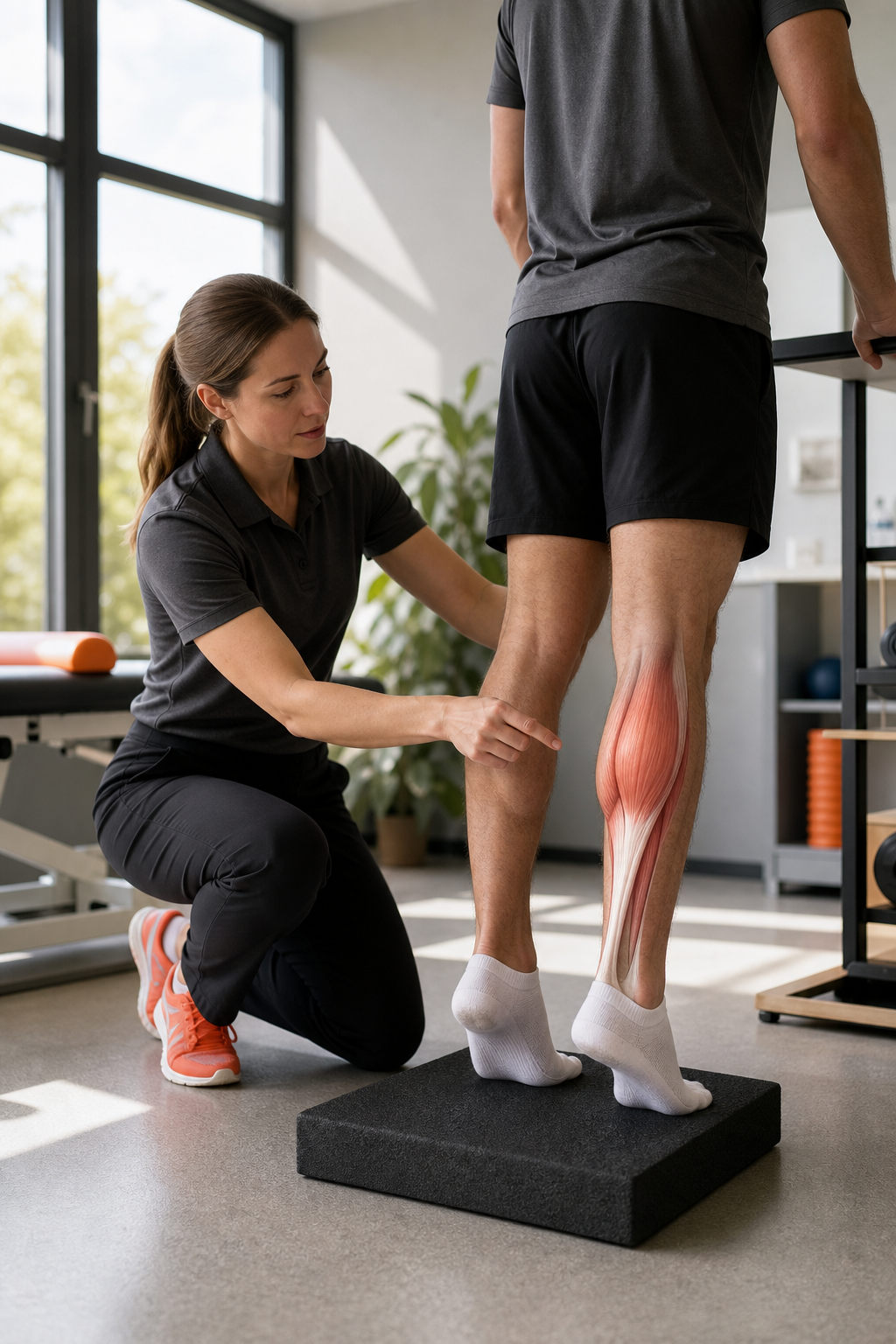
Dynamic Balance Physio builds each patient’s program around these principles, tracking progress with weekly check‑ins. By the fourth or fifth week most people can start sport‑specific drills like hop jumps or quick‑step agility work.
Remember, the muscle needs time to adapt. If soreness lingers beyond 48 hours after a session, back off the load and repeat the previous level before moving forward.
FAQ
How long does a typical calf strain take to heal?
Most mild to moderate strains heal in 4‑12 weeks if you follow a structured physiotherapy plan and avoid re‑injury.
Can I do calf stretches during the acute phase?
Gentle range‑of‑motion work is safe early on, but deep static stretches should wait until pain drops below a 3/10.
Is icing still useful after the first 48 hours?
Ice can help with flare‑ups later in rehab, but it’s not needed every day once swelling is under control.
Should I use a walking boot for a calf strain?
A boot is only for severe tears that prevent any weight‑bearing; most strains improve with the R.I.C.E. approach and gradual loading.
When can I return to running?
Start with walk‑run intervals once you can walk pain‑free for 30 minutes and complete single‑leg raises without discomfort.
Ready to get back to your sport or daily routine? Book an assessment with Dynamic Balance Physio, where our team designs a personalized rehab plan and guides you through each step. Your next move is to schedule that first visit and start the recovery journey.
{
“@context”: “https://schema.org”,
“@type”: “Article”,
“headline”: “Physiotherapy for Calf Strain: Step‑by‑Step Guide”,
“image”: [
“https://dynamicbalancephysio.ca/wp-content/uploads/2026/08/batch_85285_0_3d7cfc52f666.png”,
“https://dynamicbalancephysio.ca/wp-content/uploads/2026/08/batch_85285_1_3c0425c8dc9e.png”
],
“author”: {
“@type”: “Organization”,
“name”: “Dynamic Balance Physio”
},
“datePublished”: “2024-07-27”,
“dateModified”: “2024-07-27”,
“mainEntityOfPage”: {
“@type”: “WebPage”,
“@id”: “https://dynamicbalancephysio.ca/physiotherapy-calvestrains-guide”
}
}