

How to Relieve Elbow Pain at Home
If your elbow aches after a workout, a long day at the desk, or a minor fall, you don’t have to live with it. Below is a step‑by‑step plan that lets you tackle the pain yourself, right from your living room.
⚠️ Disclaimer: The information in this article is for educational purposes only and is not a substitute for professional medical advice. Consult a qualified physiotherapist or healthcare provider before starting any new treatment or exercise program.
Step 1: Check Your Symptoms and Reduce Irritating Activities for Elbow Pain
First, figure out what’s hurting. Look for tenderness on the outer side of the elbow (typical for tennis elbow) or on the inner side (golfer’s elbow). Notice if the pain spikes when you grip a tool, lift a grocery bag, or type for long periods. A quick self‑check can rule out red flags like sudden swelling, a locked joint, or numbness that spreads down the arm. Those signs need a doctor’s eye.
Once you know the trigger, cut back on the offending motion. If you’ve been hammering, switch to a lighter tool or take five‑minute breaks every half hour. If typing is the culprit, keep your wrists neutral and use a soft‑pad mouse. Reducing stress lets the irritated tendon start healing.
We like to give patients a simple checklist they can print. It reminds them to note when the pain began, what makes it worse, and any swelling they see. physiotherapy exercises for tennis elbow includes a handy symptom log you can copy.
When you’ve trimmed the aggravating activities, give the joint a few days of gentle motion. Light walking of the arm, without weight, keeps blood flowing and stops stiffness from setting in. For related foot health, see our guide on foot arch support.
Step 2: Use Cold or Heat Therapy at the Right Time
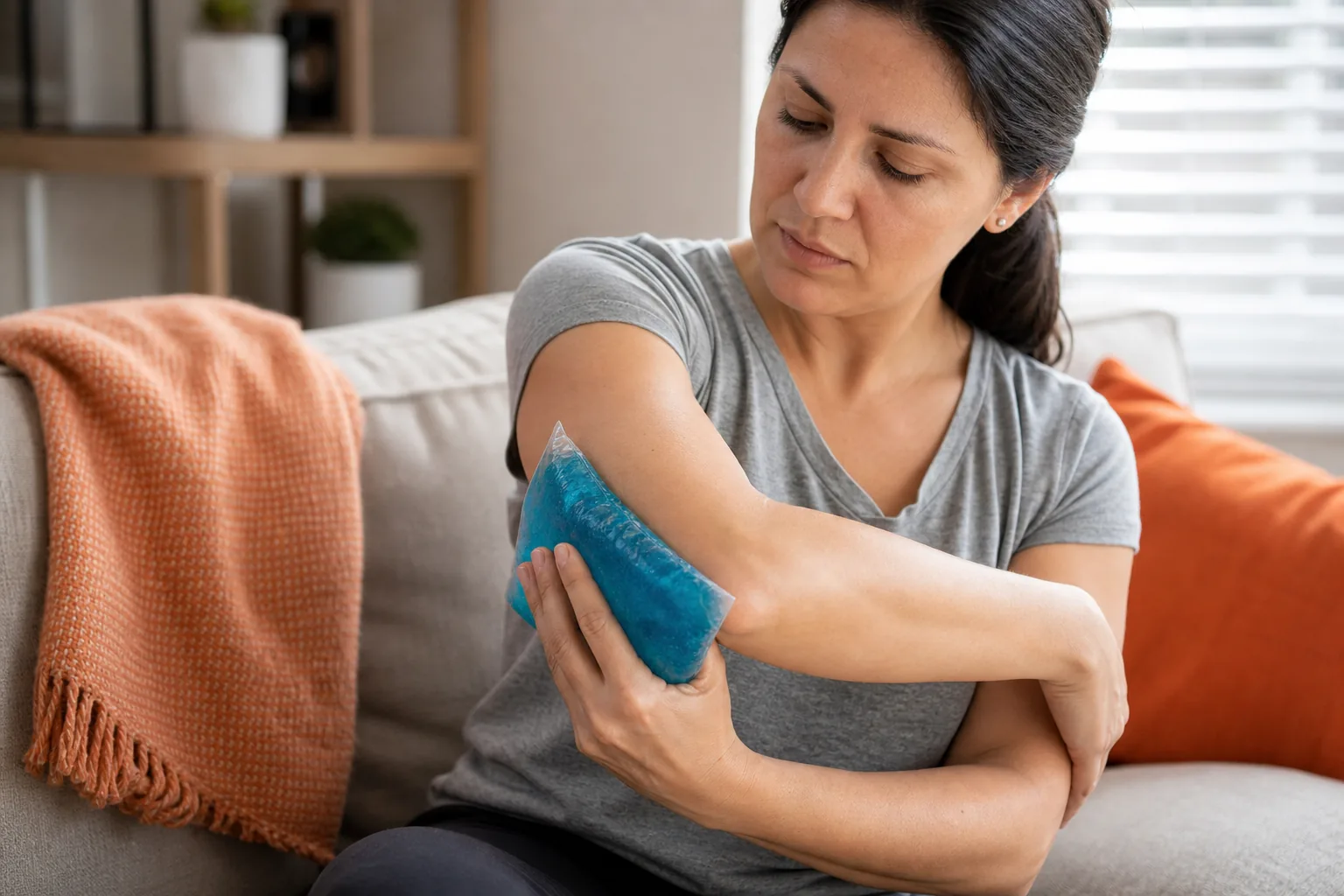
Cold packs are your friend in the first 48‑72 hours after the pain spikes. A bag of frozen peas wrapped in a thin towel for 10‑15 minutes eases swelling and numbs sharp aches. Do this 3‑4 times a day, but never apply ice directly to skin, it can cause frostbite.
After the initial swelling fades, swap to heat. A warm towel or a low‑setting heating pad for 10‑20 minutes relaxes tight muscles and improves flexibility. Heat works best before you stretch or do gentle strengthening, because warm tissue moves more freely.
Rest combined with appropriate thermal therapy is a core part of early elbow‑pain management. See research on elbow pain for additional background.
Just remember: if your elbow is still red, hot, or very tender, stick with ice. Heat on an inflamed joint can worsen swelling.
Step 3: Restore Movement With Gentle Elbow and Wrist Stretches
Now that the pain is calmer, bring motion back slowly. The goal is to lengthen the tight forearm muscles without causing a flare‑up.
Start with the wrist extensor stretch: hold your arm straight, palm down, and gently pull the hand back with the other hand until you feel a light pull along the top of the forearm. Hold for 20‑30 seconds, repeat three times.
Next, flip the stretch. Palm up, fingers pointing down, and use the opposite hand to push the fingers back toward your forearm. This works the wrist flexors. Again, 20‑30 seconds, three reps.
For the elbow itself, try a simple flexion‑extension swing. Stand with your arm at your side, bend the elbow to 90°, then straighten it fully. Do 10 slow reps, feeling a stretch at the end of each movement.
These moves can be used as gentle starter stretches for lateral epicondylitis.
Watch for sharp pain. If any stretch feels stabbing, ease off a few degrees or skip that move for today. Gentle tension, not tearing, is what you’re after.
Step 4: Build Strength Gradually With Forearm, Grip, and Shoulder Exercises
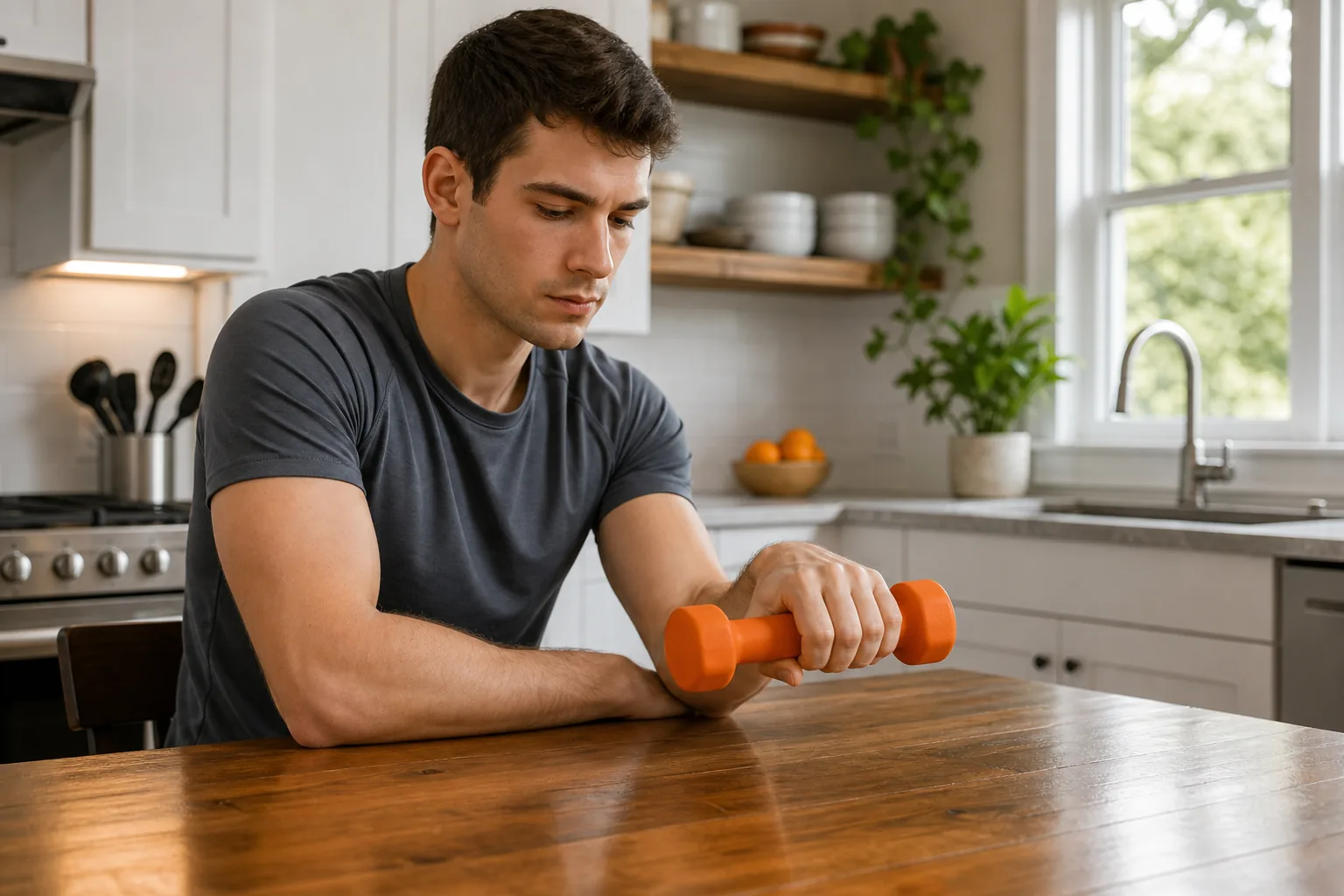
Strengthening the muscles that attach to the elbow helps the tendon heal faster. Begin with eccentric wrist extensions: rest your forearm on a table, palm down, and hold a light weight (a 1‑lb can works). Lower the hand slowly, then use the other hand to help raise it back. Do 10‑12 reps, one set, and add a second set after a few days if it feels easy.
Grip work is next. Squeeze a soft rubber ball for 5 seconds, then relax. Aim for three sets of ten squeezes. This builds the forearm flexors without stressing the elbow joint.
Don’t forget the shoulder blade. Simple scapular squeezes, pull your shoulder blades together for five seconds, activate the muscles that support arm motion. Perform two sets of ten.
Progress matters. If a weight feels too easy, increase by no more than 10% each week. If pain creeps above a 4/10 rating during the set, drop the load or cut back a rep.
These recommendations support gradual progression over time for elbow-pain cases.
Step 5: Return to Work, Sport, and Daily Activities Without Reinjury
When the pain stays below a 3/10 level for a week straight, start easing back into your normal tasks. For office work, keep your keyboard at elbow height and take a short stretch break every hour.
For sports, begin with short, low‑intensity sessions. If you play tennis, swing a racquet at half speed for five minutes, then pause. Watch how the elbow feels; add a minute each session until you can play a full set without pain.
If you’re returning to a physically demanding job, use the “24‑hour rule”: if a day’s activity makes the pain jump up the next morning, pull back the load. A gradual ramp‑up protects the tendon from sudden overload.
Should the pain flare despite these steps, it’s time to see a professional. Our team at Dynamic Balance Physio can run a detailed assessment, tailor a rehab plan, and provide hands‑on techniques that speed recovery.
Frequently Asked Questions
Can I use over‑the‑counter pain meds for elbow pain?
Talk with your doctor or pharmacist about whether an over-the-counter pain reliever is safe for you.
How long should I ice my elbow?
Apply ice for 10‑15 minutes, up to four times a day, during the first two to three days after the pain spikes.
Is heat ever a bad idea?
Heat can worsen swelling if the joint is still inflamed, so wait until the first 48‑72 hours have passed and the area feels less hot to the touch.
What if stretching feels painful?
Stretch only to a point of mild tension. Sharp or stabbing pain means you’re pulling too hard; back off a little and try again later.
When should I see a physiotherapist?
If the pain doesn’t improve after 2‑3 weeks of home care, or if you notice weakness, clicking, or loss of motion, schedule an appointment with Dynamic Balance Physio for a personalized rehab program.
Conclusion
Start with rest, ice, and the gentle stretches we outlined, then build strength step by step. If you hit a wall, book a session with Dynamic Balance Physio, we’ll assess, treat, and get you back to pain‑free activity.