If you’ve been dealing with heel pain that won’t quit, you’ve probably heard about shockwave therapy and physiotherapy. But which one actually works? The answer isn’t simple , it depends on how long you’ve had pain, what you’ve tried, and what your goals are. Below are 10 options, from first-line care to advanced treatments. We’ll break down what each involves, who it’s best for, and how they compare.
1. Dynamic Balance Physio (Our Top Pick) , Complete Care Combining Shockwave & Physiotherapy
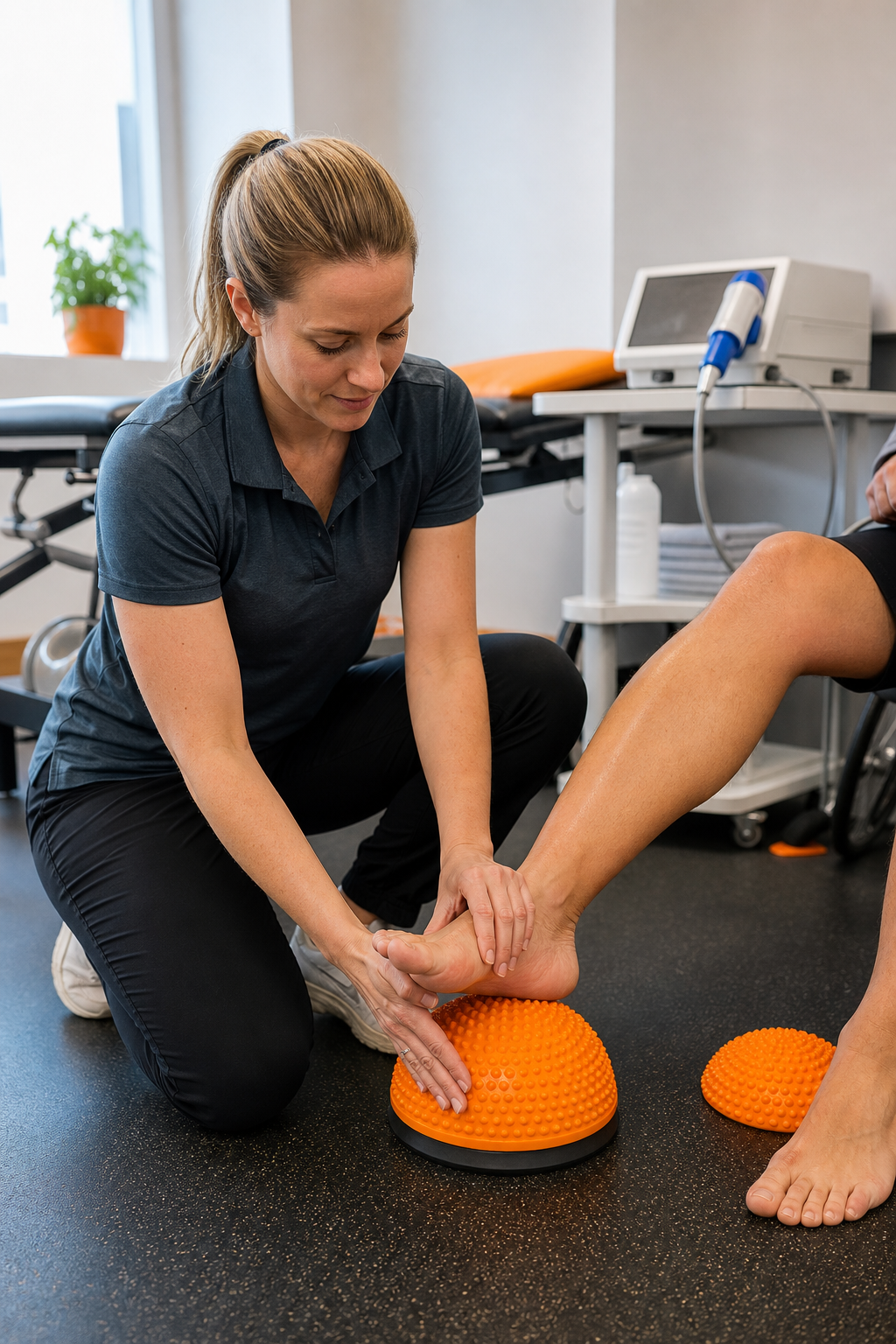 Dynamic Balance Physio offers a unique approach that blends the best of both worlds. Instead of forcing you to choose between shockwave therapy and physiotherapy, they integrate them into a single, personalized plan. Research shows that physiotherapy alone achieves up to 90% pain resolution in many cases, but for stubborn heel pain that lasts more than six months, adding shockwave can speed things up. At Dynamic Balance Physio, you get a thorough assessment first, then a custom program that might include manual therapy, stretching, strengthening, and shockwave if needed.
Their approach is backed by evidence and delivered by experienced practitioners. They serve Surrey, BC, and specialize in sports injuries, ICBC claims, and workplace rehab. If you want a clinic that doesn’t just pick one method but uses both smartly, this is your best bet. Book an assessment to get started with a tailored plan.
Caveat: You’ll need to commit to multiple sessions , physiotherapy typically requires several visits, though shockwave can be as few as one. But the combination tends to get you better results faster.
2. Shockwave Therapy Alone , High-Intensity Energy for Stubborn Heel Pain
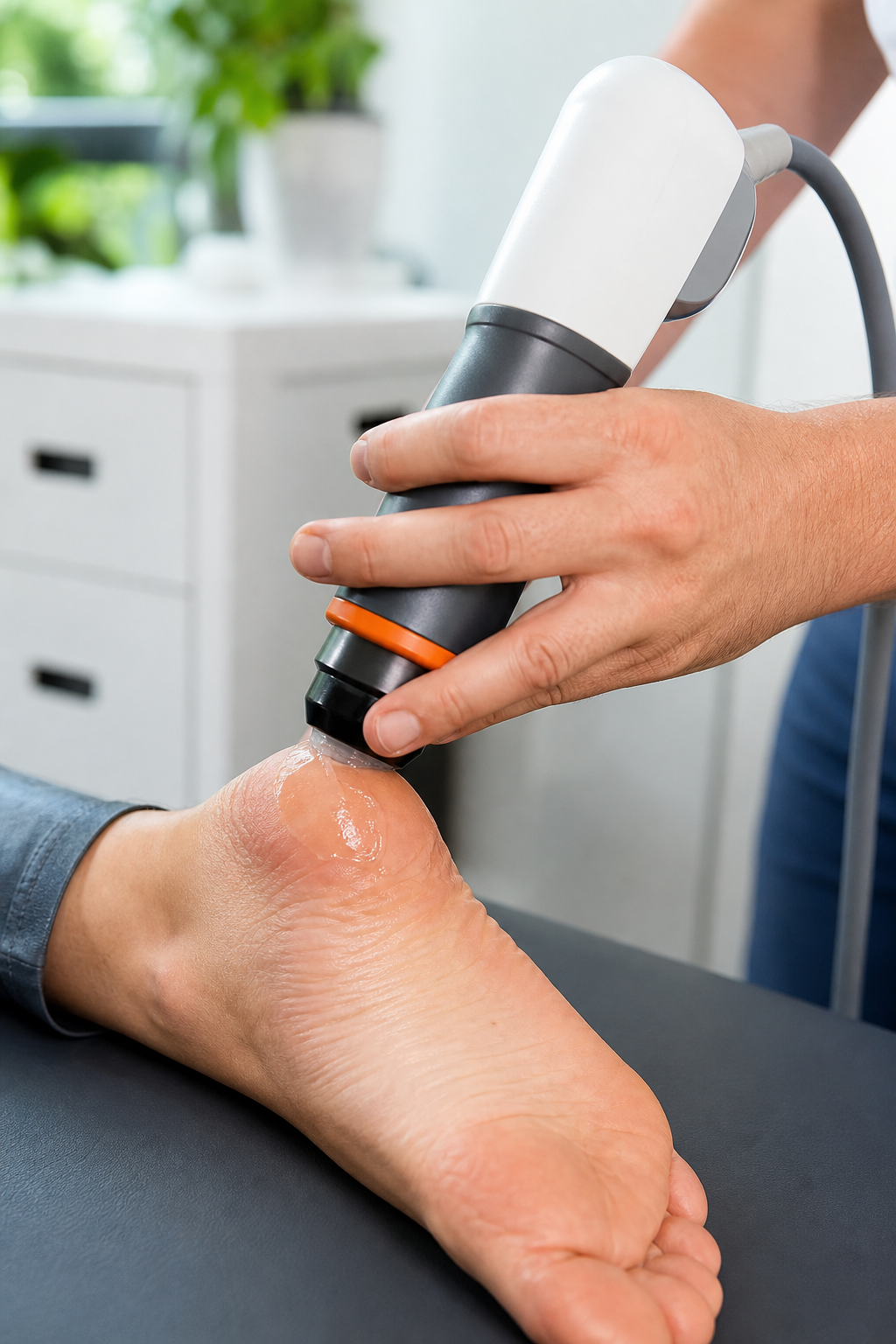 Shockwave therapy, also called extracorporeal shockwave therapy (ESWT), uses sound waves to stimulate healing in the plantar fascia. It’s a non-invasive option that works best for chronic cases , pain that has stuck around for more than three months. ESWT significantly reduced pain and improved function in amateur runners with plantar fasciitis, with benefits lasting up to five years. Most people need 1 to 6 sessions, and a single session can sometimes give comparable relief to weeks of physiotherapy.
The main advantage is efficiency: you walk in, get treated in about 10-15 minutes, and go home with no downtime. It’s especially good for people who have tried stretching, ice, and orthotics without success.
Caveat: It can be uncomfortable during the procedure, and you might need four to six months to see the full effect. Also, it’s often not covered by insurance, so cost can be a factor.
3. Physiotherapy Alone , Stretching, Strengthening, and Manual Therapy
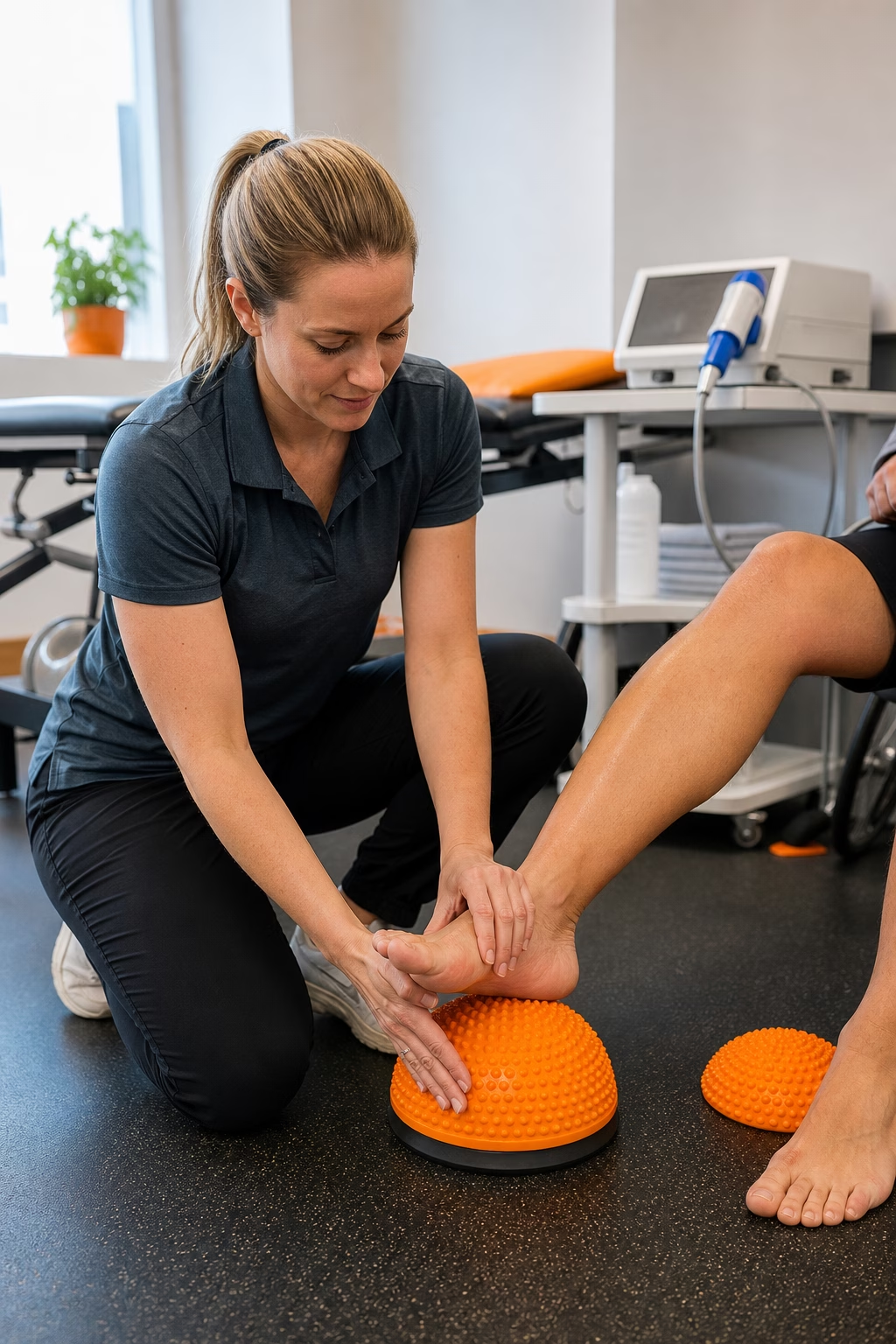
Physiotherapy is the standard first-line treatment for plantar fasciitis. It includes a mix of stretching, strengthening, manual therapy (like joint mobilization and massage), and education. The combination of calf stretching, cross-friction massage, and foot manipulation significantly reduces pain and improves range of motion. Most patients need about 12 sessions over four weeks, and success rates are high , up to 90% for early-stage cases.
The beauty of physiotherapy is that it addresses underlying causes like tight calves or weak foot muscles, not just the symptom. It’s low-risk and can be done at home with guidance.
Caveat: It requires commitment. You have to do your exercises regularly, and results can take weeks. If you’ve had pain for six months or more, physiotherapy alone may not be enough.
4. Shockwave + Physiotherapy Combination , The Synergistic Approach
Some clinics, like Dynamic Balance Physio, recommend combining shockwave therapy with physiotherapy for the best of both. The idea is simple: physiotherapy strengthens and stabilizes the foot, while shockwave breaks down scar tissue and stimulates healing at a cellular level. Studies show that this combo can improve outcomes for chronic plantar fasciitis, especially in athletes.
Typically, you might start with physiotherapy for a few weeks. If progress stalls, shockwave is added. Alternatively, you may begin with a single shockwave session to kickstart healing, then follow with physiotherapy to maintain and build on the gains. This approach reduces the number of overall visits compared to physiotherapy alone.
Caveat: Not all clinics offer both, and the cost can add up. But for people who have failed one approach, the combination often works.
5. Shockwave with Biologic Injections
Combining shockwave with biologic injections may enhance healing. The combination creates a synergistic effect where shockwave primes the tissue and the biologic delivers concentrated growth factors.
This combination is best for chronic, refractory cases where nothing else has worked. It is more invasive than shockwave alone, but still far less than surgery.
Caveat: Biologic injections can be costly and are not always covered by insurance. Patients may need to avoid anti-inflammatories afterward, and results take time.
6. Radial vs Focused Shockwave , Choosing the Right Device Type
Not all shockwave machines are the same. Radial shockwave therapy (RSWT) spreads energy outward, affecting a broader area. It’s cheaper and more common, but can be more uncomfortable. Focused shockwave therapy (FSWT) targets deeper tissue with higher energy and is often considered more effective for plantar fasciitis. The same logic likely applies to the heel.
When choosing a clinic, ask which type they use. Focused shockwave may be worth the extra cost if you have a deep, chronic issue.
Caveat: Focused shockwave typically requires local anesthesia and costs more. Radial is easier to tolerate but may need more sessions.
7. Physiotherapy with Dry Needling , Trigger Point Release
Dry needling involves inserting thin needles into trigger points in the calf or foot muscles to release tension and improve blood flow. It’s thought to work by breaking up knots and stimulating local healing responses.
This is a good add-on if you have tight calves or muscle knots contributing to your heel pain. It’s low-cost and can be done during a regular physio session.
Caveat: You may feel sore for a day or two after. It’s not recommended if you’re on blood thinners or have a fear of needles.
8. Corticosteroid Injections , Quick Pain Relief with Trade-Offs
Corticosteroid injections provide fast, powerful pain relief. They’re often used when pain is severe , say, 8 or 9 out of 10 , to calm things down enough for other treatments to work. Injections work quickly but the effect may not last.
Best use: a temporary rescue measure for acute flare-ups. Not a long-term solution.
Caveat: Repeated injections can weaken the plantar fascia and increase rupture risk. Most doctors limit them to 2-3 total.
9. Home Care and Stretching Protocols , Foundation for Any Treatment
Every treatment plan should include daily stretches and basic foot care. Specific recommended exercises: calf stretches on a step, plantar fascia stretches with a towel, toe curls, and marble pickups. These exercises improve flexibility and strengthen the small muscles of the foot. Consistency is key , doing them morning and evening can reduce pain within weeks.
This option is best as a preventive measure or for mild, early-stage symptoms. It costs nothing and has no side effects.
Caveat: Home care alone rarely cures chronic plantar fasciitis. It works best as part of a broader treatment plan.
10. Long-Term Management Strategies , Preventing Recurrence
Once you’re pain-free, the goal is to stay that way. Long-term management includes maintaining good foot mechanics with appropriate footwear, avoiding sudden increases in activity, and continuing a maintenance stretching routine. A physical therapist can identify biomechanical issues like overpronation or tight calves and prescribe custom orthotics or specific exercises to address them.
This is essential for runners and people who stand all day. Think of it as an investment in your feet.
Caveat: It requires ongoing effort. But it’s much easier than treating a recurrence.
Comparison at a Glance: Shockwave vs Physiotherapy Options
Frequently Asked Questions
Is shockwave therapy better than physiotherapy for plantar fasciitis?
It depends on the stage. For early symptoms (less than 6 weeks), physiotherapy is the first choice. For chronic pain (over 6 months), shockwave therapy often works faster and with fewer visits. A combination of both may be the most effective.
How many shockwave sessions do I need for plantar fasciitis?
Most people need 1 to 6 sessions, depending on severity. A single session can give noticeable relief, but 3 sessions are typical. Focused shockwave may need fewer sessions than radial.
Can I do both shockwave and physiotherapy at the same time?
Yes, and many clinics like Dynamic Balance Physio recommend it. The combination can speed up recovery and address both the symptoms and underlying causes.
Does shockwave therapy hurt?
It can be uncomfortable, especially with radial shockwave. Focused shockwave is often less painful because it targets deeper tissue. Most people tolerate it well.
What is the success rate of shockwave for plantar fasciitis?
Studies report success rates between 50% and 90%. It works best for chronic cases that haven’t responded to other treatments.
Conclusion: Choosing the Right Path for Your Plantar Fasciitis Recovery
Start with what’s proven: a physiotherapy program tailored to your needs. That’s where Dynamic Balance Physio shines , they offer a complete assessment and a plan that can include shockwave if you need it. If your heel pain has been around for months and you’re ready for a faster solution, ask about shockwave therapy. Either way, the key is to take action. Don’t let heel pain keep you from doing what you love. Book a consultation with a trusted clinic today.