

Best Lower Back Pain Stretches for Truck Drivers
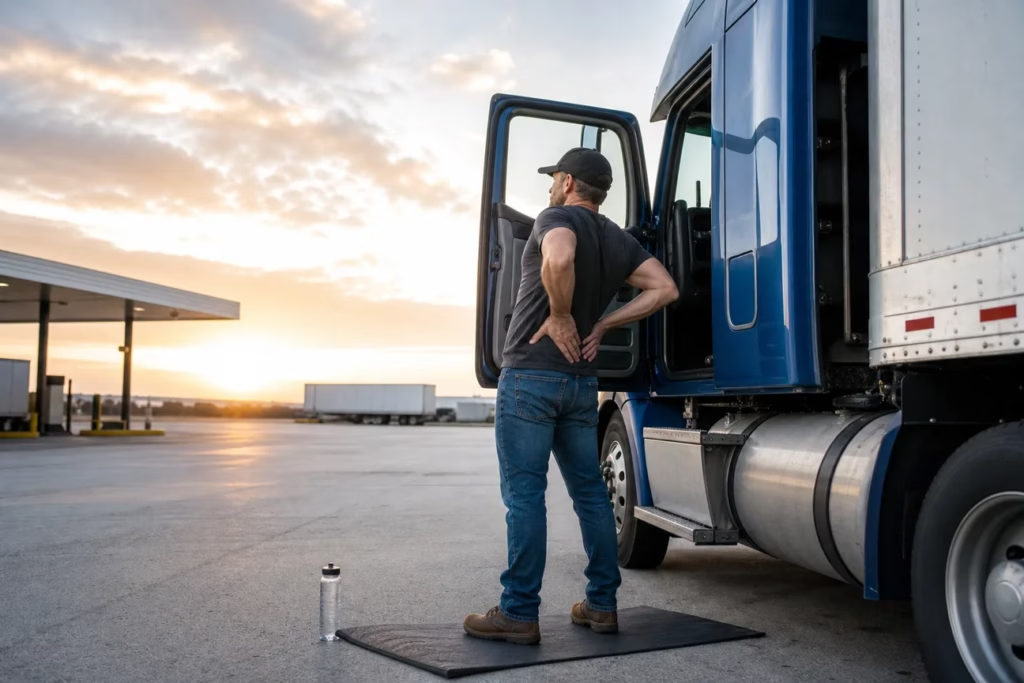
Backaches ruin long hauls. Here are the eight most effective lower back pain stretches for truck drivers, plus a quick way to pick the right one for you.
⚠️ Disclaimer: This content is for educational purposes only and readers should consult a qualified physiotherapist before attempting any stretches.
1. Pelvic Tilting Stretch , Loosen hips & back on the seat
The pelvic tilting stretch is a simple move you can do while seated in your cab. It targets the hips and lower back, helping to restore the natural curve of your spine. The motion helps ease stiffness after hours on the road. Low back pain affects most professional drivers. The stretch requires no extra gear , just sit tall, inhale, arch your back, then exhale and pull your belly in. Do ten repetitions every time you stop for a break.
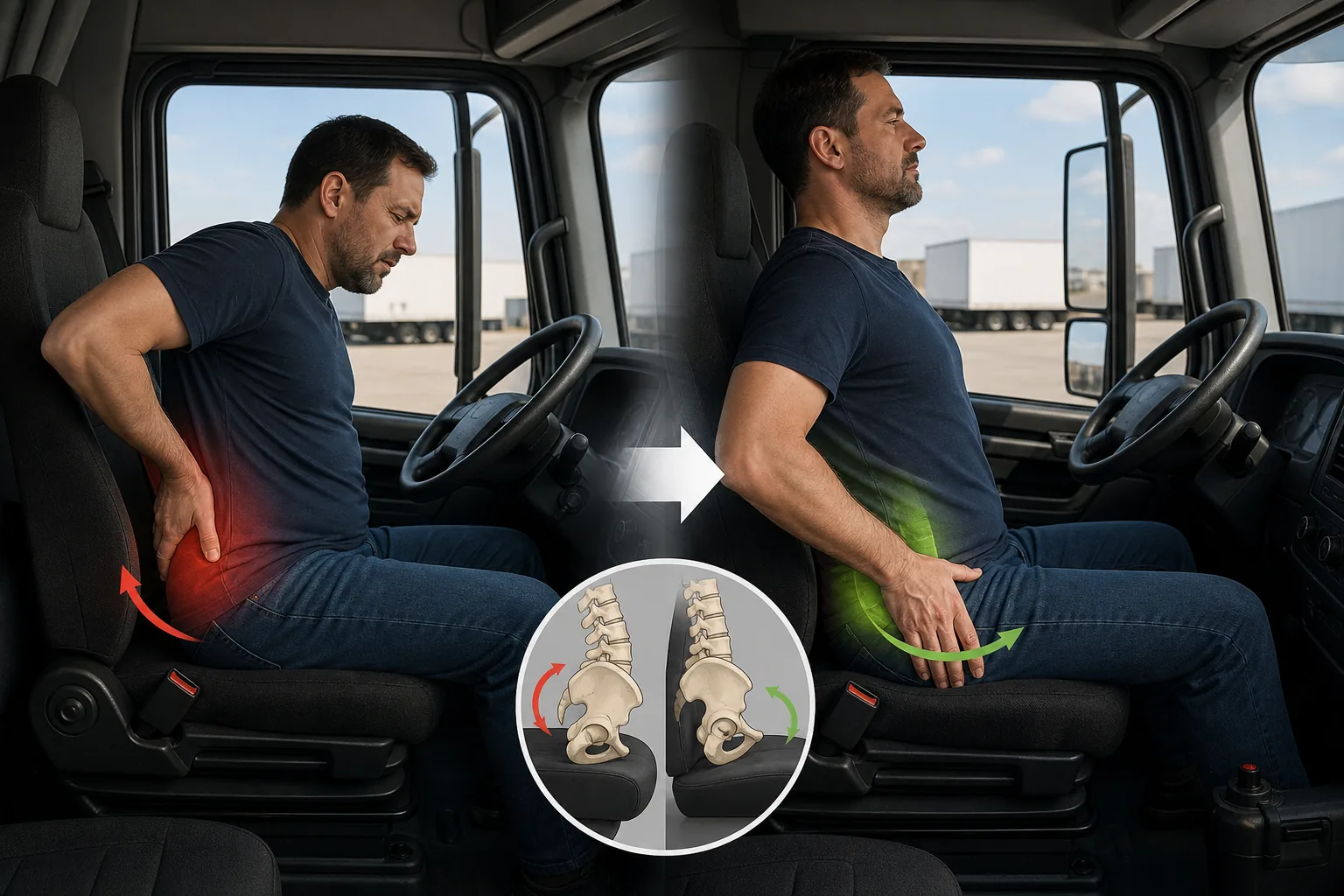
Best for drivers who spend most of the day in a fixed position. A caveat: if you feel sharp pain, stop and check your posture first.
2. Figure Four Stretch , Relieve sciatica & lower back stiffness
The figure four stretch reaches deeper into the hips, glutes, hamstrings and lower back. By crossing one ankle over the opposite knee on the edge of the sleeper, you open the piriformis and ease sciatic nerve pressure. A seated version can be performed on the edge of the sleeper. Hold for 30 seconds, then switch sides.
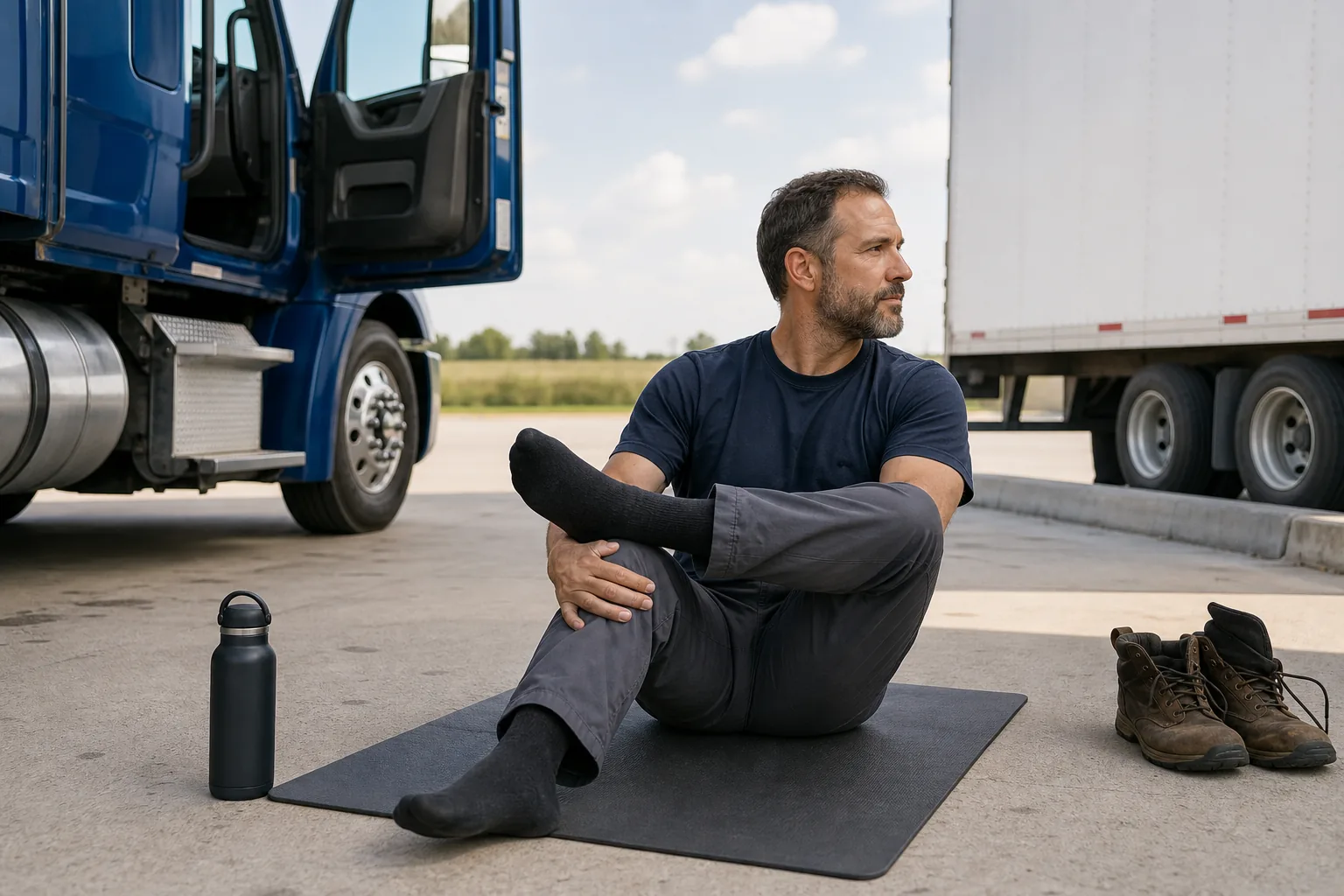
It’s ideal for drivers who feel a tingling down the leg after a long drive. The stretch can be a bit intense for tight hips, so start with a gentle press and increase depth as flexibility improves.
3. Static Back , Deep spinal extension for a 3‑minute hold
Static Back is an Egoscue exercise that uses gravity to relax the back muscles. Lie on your back with legs propped on an Egoscue box or sturdy chair, arms out to the sides, and hold for three minutes. This prolonged extension realigns the spine and reduces chronic tension.
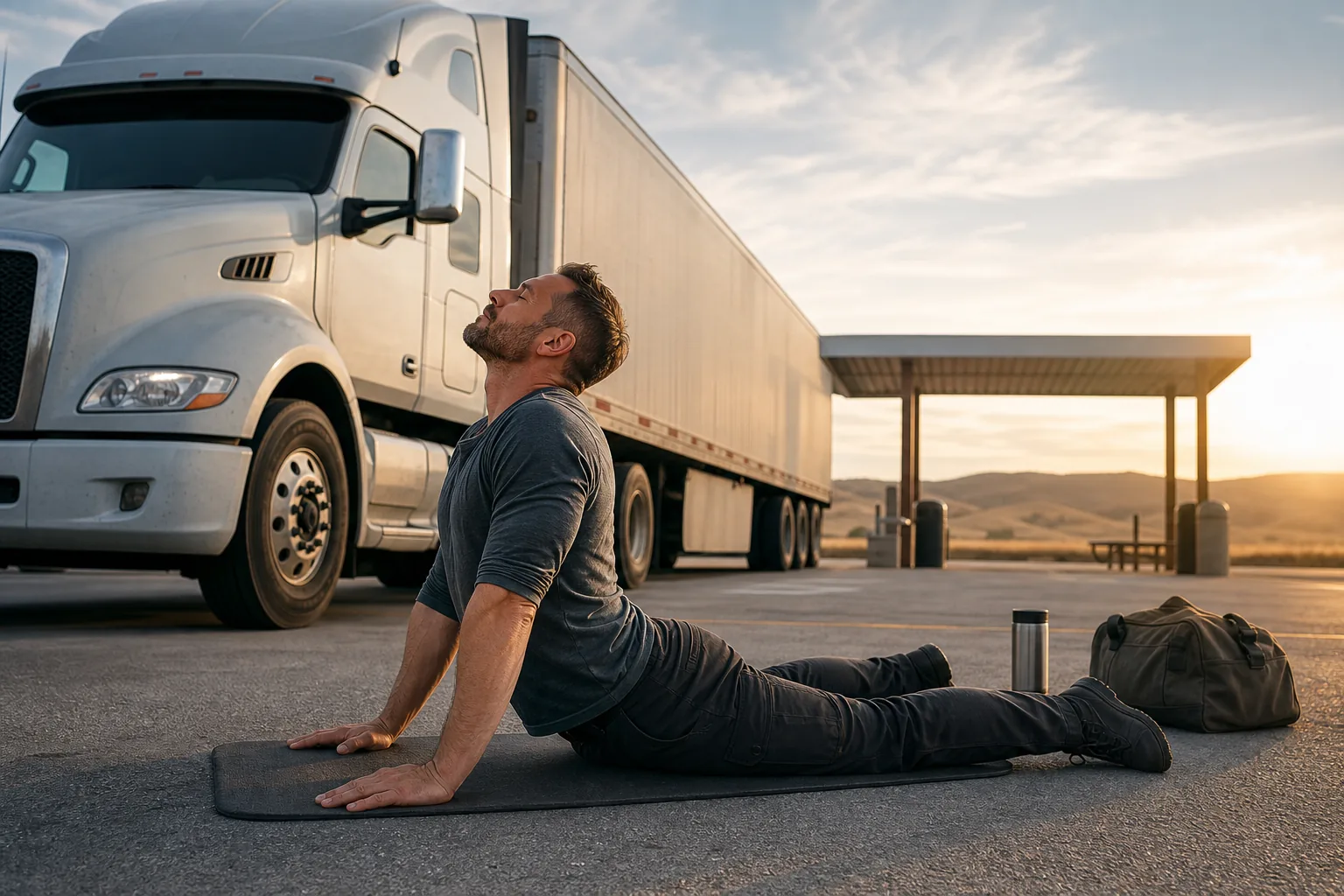
Because the hold is long, start with a shorter duration and build up. Drivers with severe back pain should consult a therapist before attempting the full three‑minute hold.
4. Abductor Presses , Strengthen hips & thighs while seated
Abductor presses add resistance to the static back position. Loop a belt or knot around both thighs, then press the knees outward against the resistance. Perform three sets of ten reps. This move strengthens the hip abductors, which support pelvic stability during long drives.
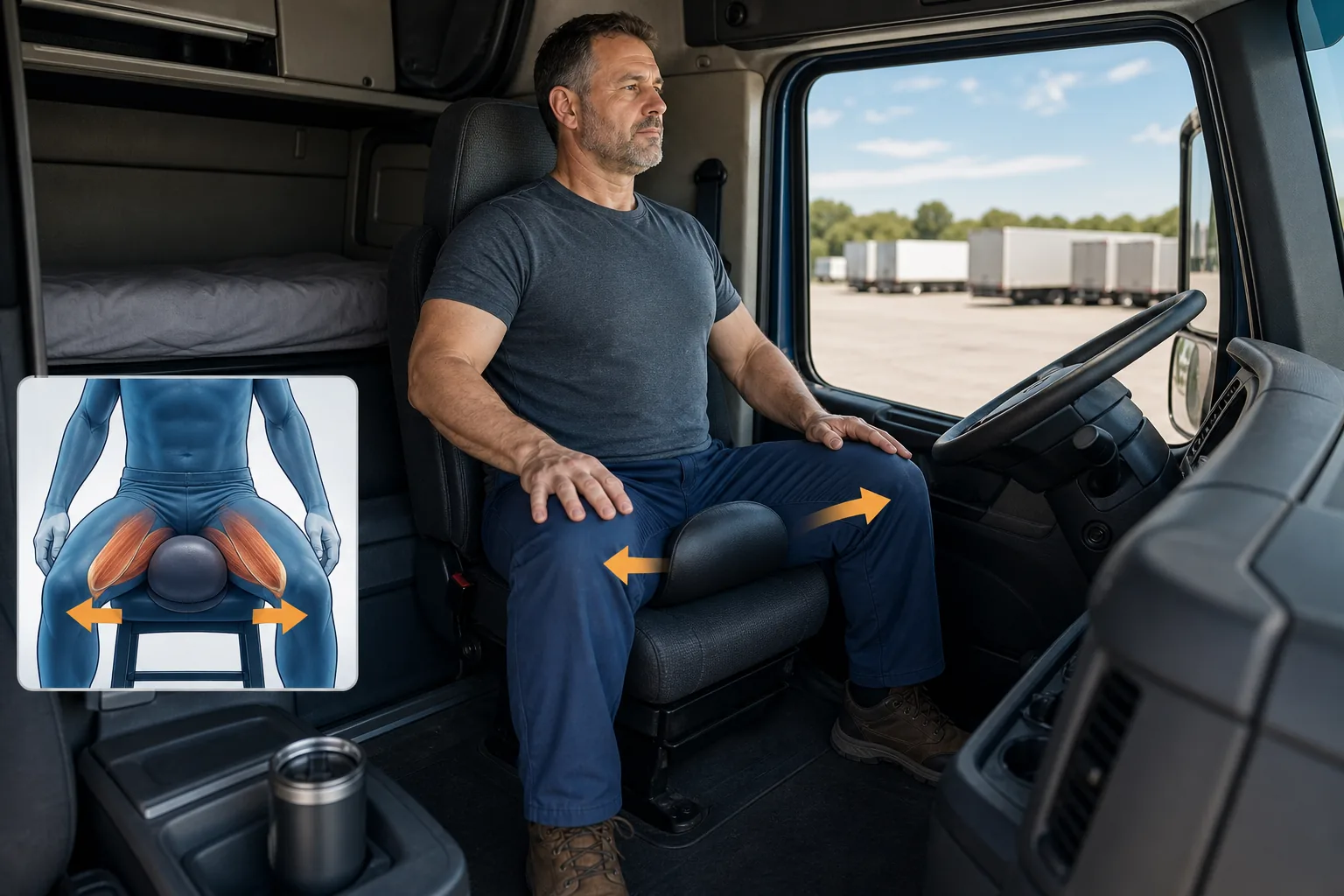
Strong hips help keep the lower back aligned when you shift gears or reach for controls. If you lack a belt, a sturdy rope works just as well.
5. Upper Spinal Twist , Gentle rotational stretch for mobility
The upper spinal twist rotates the thoracic spine, easing tension that builds from leaning forward on the steering wheel. Lie on your back, bend knees, and let them fall to one side while keeping shoulders flat. Hold for 30 seconds, then repeat on the other side.

Rotational mobility keeps the rib cage free, which improves breathing during long trips. Regular movement helps maintain spinal health and reduces chronic pain risk.
Good for drivers who spend hours hunched. Avoid the twist if you have a recent shoulder injury.
6. Supine Groin Progressive , Hip flexor release for long hauls
This stretch targets tight hip flexors that shorten during prolonged sitting. Lie on your back, bend one knee, and place a 15‑pound weight (a box or step) on the opposite leg. Hold the position for at least ten minutes per side, allowing the hip flexor to relax.
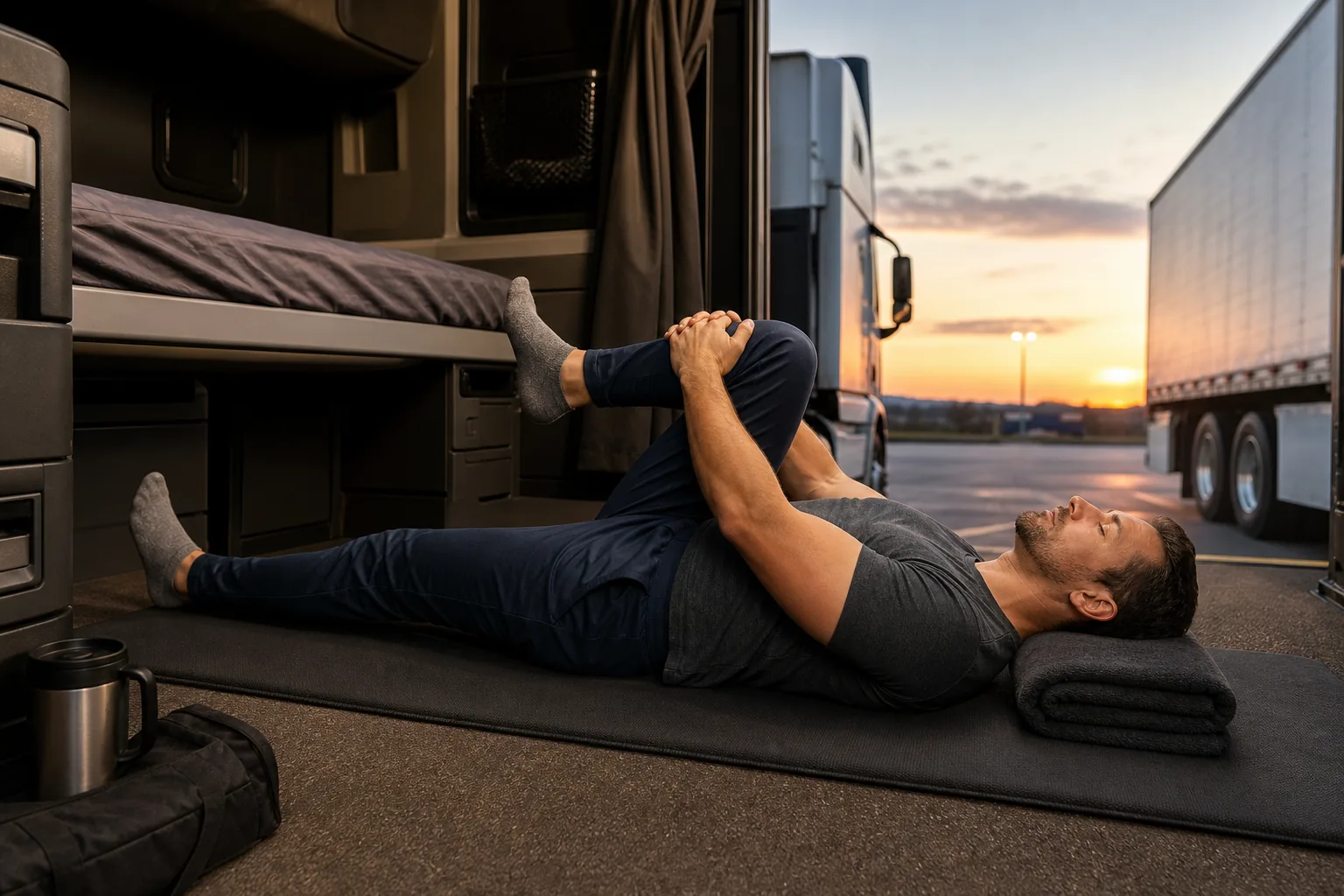
Long‑haul drivers benefit from the deep release because hip flexor tightness pulls the pelvis forward, increasing lumbar strain. The move is slow‑burn; start with a lighter object if the weight feels too heavy.
Stretch Comparison Table
How to Choose the Right Stretch for You
For a personalized program, our team at Dynamic Balance Physio can design a routine that fits your schedule and any injury history.
FAQ
Can I do these stretches while driving?
No. Safety comes first. Perform the moves during breaks, at rest stops, or when you’re parked.
How often should I stretch?
Aim for at least three sessions a day , morning, mid‑haul, and evening , each lasting a few minutes.
Do I need special equipment?
Most stretches need only your seat or a simple object like a belt; the supine groin progressive uses a 15‑lb weight you can find at a truck stop gym.
What if I have a herniated disc?
Consult a physiotherapist before starting any new stretch. Some moves, like the static back hold, may need modification.
Will these stretches help my vertigo?
Dynamic Balance Physio combines these stretches with vestibular rehab, which can reduce vertigo symptoms linked to neck and back tension.
Conclusion
Start with the pelvic tilting stretch and add the others as you feel stronger. Book a session with Dynamic Balance Physio to fine‑tune your routine and keep pain off the road.
- Assess where you feel the most tension , hips, lower back, or thoracic spine.
- Consider equipment you have on the road; choose moves that need only a seat or a small weight.
- Start with shorter holds and build up as comfort improves.
- If pain spikes, stop and book a session with a physiotherapist.