
Plantar Fasciitis Exercises and Stretches: A Step‑by‑Step Guide
Heel pain can shut you down fast. If you’re looking for plantar fasciitis exercises and stretches, the good news is you can fight plantar fasciitis at home with a few focused moves. Follow these five steps and you’ll start feeling better in weeks.
⚠️ Disclaimer: This information is for educational purposes only. For personalized assessment and treatment, please consult a licensed physiotherapist or healthcare professional.
Step 1: Gentle Warm‑Up to Activate the Foot
The first thing you need is a quick warm‑up that wakes up the muscles around the heel without stressing them. Stand with your feet hip‑width apart, place one hand on a sturdy surface for balance, and rise onto the balls of your feet. Hold the lift for a moment, then lower back down. Do this 10‑12 times.
Next, sit on a chair, cross one ankle over the opposite knee, and gently pull the toes toward your shin. You’ll feel a mild stretch along the bottom of the foot. Hold for 15‑20 seconds, then switch sides. This movement loosens the plantar fascia and improves ankle range of motion, which research shows reduces strain on the heel (Wikipedia).
Finish the warm‑up with a few ankle circles, 5 forward, 5 backward, while keeping your weight centered. By now you should have increased blood flow to the foot and be ready for deeper stretches.
Step 2: Calf (Gastrocnemius) Stretch
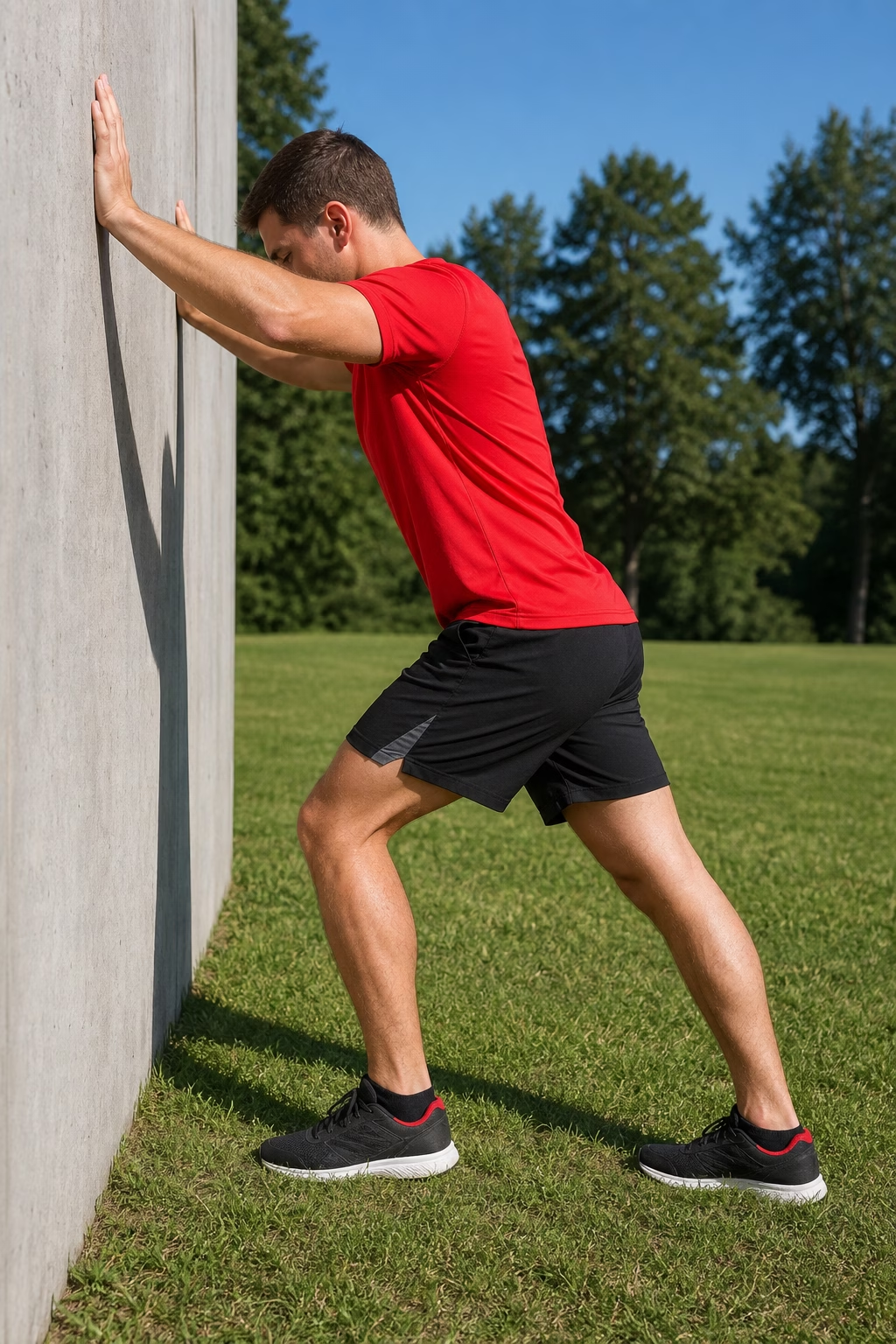
Stretching the gastrocnemius eases the pull on the plantar fascia. Stand facing a wall, place both hands on it for support, and step one foot back about a foot’s length. Keep the back leg straight and the front knee bent. Lean forward until you feel a stretch in the upper calf of the back leg.
Hold the stretch for 30‑40 seconds, then repeat on the other side. Aim for three sets per leg. This position lengthens the calf muscle fibers, which helps lower the tension that drags on the fascia during walking.
For extra depth, you can use a step or a thick book: stand with the forefoot on the edge and let the heel drop below the level of the toes. Hold for the same duration.Pro Tip: Do the stretch after a light walk, when the muscles are warm.

Step 3: Soleus Stretch for Deep Calf Relief
The soleus sits under the gastrocnemius and also contributes to heel strain. To target it, bend both knees slightly while keeping the back heel on the floor. Again face a wall, hands on it, and step the back foot a little farther away than in the previous stretch.
Lean forward until you feel a deeper stretch just above the Achilles tendon. Hold for 30‑40 seconds and repeat three times per side. Keeping the knees bent isolates the soleus, letting you work the deeper calf fibers without over‑stretching the gastrocnemius.
Combine this stretch with gentle calf raises later in the routine to build strength while maintaining flexibility.
Step 4: Direct Plantar Fascia Stretch
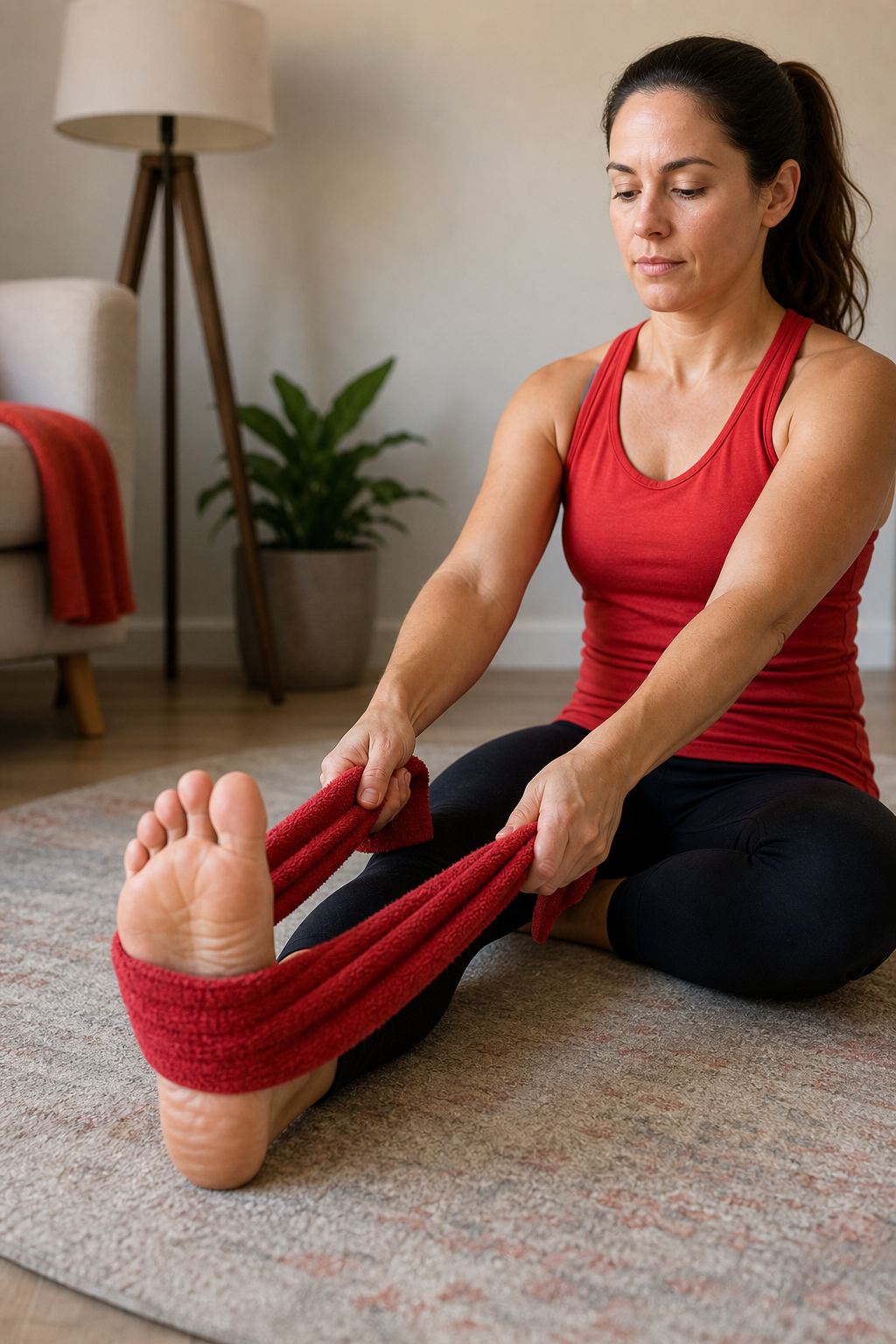
The most direct way to lengthen the plantar fascia is a seated towel stretch. Sit on the floor with your legs extended, loop a towel around the ball of the affected foot, and pull the towel toward you while keeping the knee straight. You should feel a gentle pull along the arch.
Hold for 20‑30 seconds, then release slowly. Repeat three times before getting out of bed each morning. This stretch targets the thin ligament that connects the heel to the toes, easing inflammation and improving foot mechanics.
Another option is the “wall crawl”: place your toes on a low wall, walk your hands up the wall while the heel stays down, and feel the fascia stretch along the bottom of the foot. Do this for a few seconds, then rest.
Step 5: Foot Strengthening Exercises
Strengthening the tiny muscles under the foot prevents the fascia from being overloaded. Start with a simple toe‑curl: sit with your feet flat, place a towel on the floor, and use your toes to scrunch it toward you. Do 10‑15 reps, then switch feet.
Next, try a heel‑raise on a step. Stand with only the balls of your feet on the edge, let the heels drop below the step, then rise up onto the toes. Perform three sets of 12‑15 repetitions. This move builds calf and intrinsic foot strength, both of which support the arch.
For added challenge, you can apply gentle outward pressure on the forefoot while keeping the heel planted, using your hand or a simple strap. Hold the tension for about 5 seconds, then relax. Repeat 8‑10 times.
If you need more guidance, a physiotherapist can tailor a program to your level. Shockwave Therapy vs Physiotherapy for Plantar Fasciitis explains why professional supervision often speeds recovery.
FAQ
Can I do these exercises if the pain is severe?
Yes, but keep the intensity low. Start with the gentle warm‑up and the towel stretch, and stop any move that spikes pain beyond a mild ache.
How often should I perform the routine?
Aim for two sessions per day, once in the morning and once in the evening. Consistency beats occasional long sessions.
Do I need any equipment?
No special gear is required. A wall, a step or sturdy book, and a towel are enough for all five steps.
When will I notice improvement?
Most people feel reduced heel stiffness within one to two weeks if they follow the routine daily and avoid aggravating activities.
Is it safe to combine these stretches with running?
Only after pain eases. Begin with short, easy runs on soft surfaces, and stop to stretch at each kilometer or mile marker.
Ready to take control of your heel pain? Start the five‑step routine today, track your progress, and consider a visit to Dynamic Balance Physio if pain lingers. Their personalized rehab program can fine‑tune the stretches and add manual therapy for faster relief.
{
“@context”: “https://schema.org”,
“@type”: “Article”,
“headline”: “Plantar Fasciitis Exercises and Stretches: A Step‑by‑Step Guide”,
“image”: [
“https://dynamicbalancephysio.ca/wp-content/uploads/2026/08/batch_81444_0_75b12f9691b6.png”,
“https://dynamicbalancephysio.ca/wp-content/uploads/2026/08/batch_81444_1_44be610efd19.png”
],
“author”: {
“@type”: “Organization”,
“name”: “Dynamic Balance Physio”
},
“datePublished”: “2026-07-14”,
“mainEntityOfPage”: {
“@type”: “WebPage”,
“@id”: “https://dynamicbalancephysio.ca/plantar-fasciitis-exercises-stretches”
}
}